The 16.VA had three types of bomber units stationed in the former territories of the Reich in May 1945. The most numerous were the bomber aviation regiments or BAP (Bombardirovchniy Aviatsionniy Polk) with twelve regiments equipped with Petlyakov Pe-2 and three with Douglas A-20, active on the front line. Next were the long-range bomber aviation regiments or DBAP (Dal'nebombardirovochniy Aviatsionniy Polk) with nine units flying Tupolev Tu-2, targeting the enemy rear areas. Finally, there were the night bomber aviation regiments or NBAP (Nochnoy Bombardirovchniy Aviatsionniy Polk (1)) with six regiments equipped with Polikarpov Po-2.
Night Stalkers
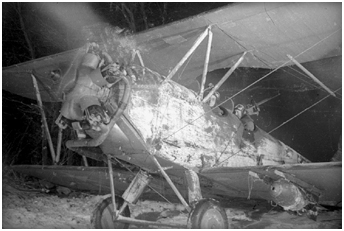
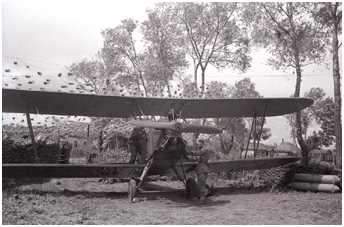 Polikarpov's small biplane, which first flew on January 7, 1928, was initially a training aircraft, as clearly indicated by its original designation U-2 (U for Uchebniy, training). It was developed into numerous civilian and military versions, and production continued until 1953 in the USSR and 1955 in Poland, after more than 30,000 aircraft had been manufactured.
The U-2s, depending on their versions, fulfilled various roles during the war such as liaison, medical evacuation, support for partisans, artillery correction, etc. But it was during bombing and night harassment missions, highlighted by the all-female regiment that the Germans reportedly nicknamed "The Night Witches" (588.NLBAP, which became the 46.GvNBAP on February 8, 1943), that these aircraft became legendary.
However, this overlooks rather quickly that this regiment was one among dozens of similar regiments... In fact, more than 80 night bomber regiments - equipped not only with U-2s, but also with R-5s and R-Zs - organized into several night bomber divisions were created during the war! (2)
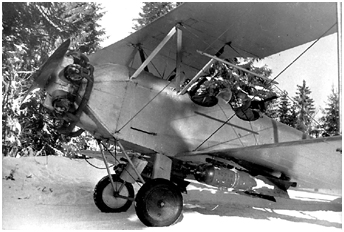
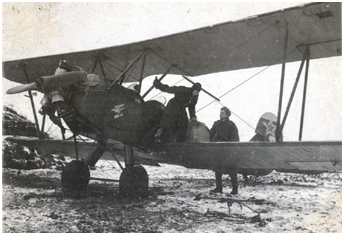 The U-2's transformation into a combat aircraft dates back to 1932 (production in 1935-1936) with the U-2 M-11 (vooruzh.) - armed - also designated U-2VVS (VVS for Military Air Forces). M-11 was the designation for the 100 hp Shvetsov engine. It was armed with a fixed PV-1 machine gun mounted on the left side of the fuselage, a Degtyarev DA machine gun mounted on a swivel in the rear cockpit, and bomb racks for small projectiles, dropped using an AP-2 bombsight. It could also carry an AFA-1B camera (with an opening in the floor) or tow a target.
Starting in 1936, a pair of NV-5bis drift meters - used to assist with positioning for level bombing - were mounted on the sides of the fuselage near the rear cockpit; using them required removing the fabric covering between the first two ribs of the lower wings to allow a view of the ground. However, it was easy to replace or remove the covering as needed. Just over 450 examples were produced by Factory n°23 in Leningrad. The military version of the U-2 dating from 1938 was designated U-2VS (Vooruzhenniy Samolet - armed aircraft), but this should not be confused with the 1942 version of the U-2VS. These aircraft were primarily used for bombing, gunnery, and photography training.
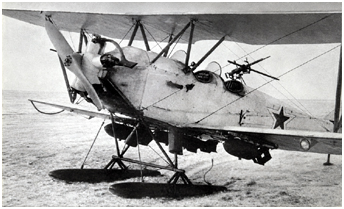
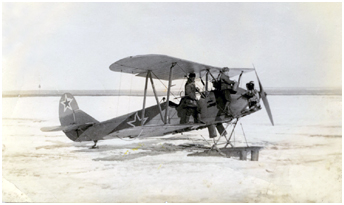 More than 10,000 civilian and military U-2s had been manufactured when war broke out on June 22, 1941. Survivors of the initial attack were virtually all incorporated. Many of them underwent modifications in the field or in workshops to make them combat-ready. Improvisation gradually led to a certain degree of standardization, giving rise to the dedicated U-2VS version (model 1942), also known as the U-2LNB (Lëgkiy Nochnoï Bombardirovshchik - light night bomber). We will focus on the model that can be considered the standard version, without dwelling on exceptions or small-batch variants (fixed machine gun, vertical fuselage bomb bay, VOM-1 model for dropping "incendiary bags," etc.).
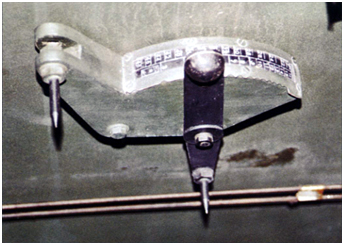
Without a bombsight suitable for night bombing, the NV-5bis drift meter was initially used; it was mounted on the right side of the fuselage under the rear cockpit, with the fabric covering removed between the root ribs of the lower wing. A simple mechanical sight developed by Factory No.387 in Kazan replaced it on the aircraft the plant built.
Aircraft from mid-war production batches could be fitted with a second sight for the pilot, mounted on the left side (as noted in the 1943 armament manual). This can be seen in two photos illustrating this article.
| ORBAT 1945 - 1953 |
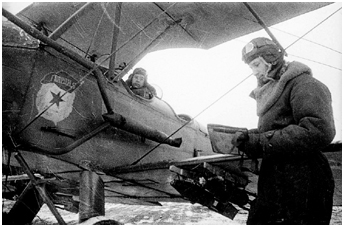
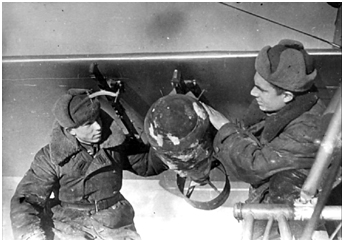
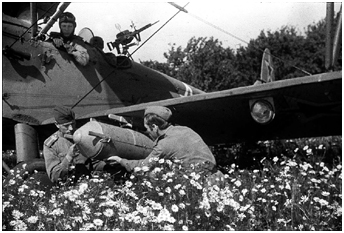
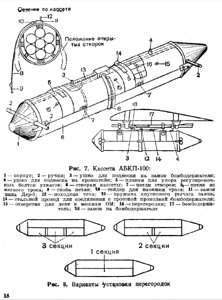 The U-2VVS were equipped with two pairs of bomb racks with Der-5 locks under the wings, for 32 kg bombs. These were replaced by Der-7s, and an additional pair of racks was added under the fuselage. By late 1942, the installation of six Der-7s had become standard. The standard armament of the U-2VS consisted of FAB-100 (up to 3), FAB-50 (6), and AO-25 (6) bombs, as well as BAS-1 containers (4) holding 20 PTAB-2,5-1,5 shaped-charge bombs and ABKP-100 containers (2) carrying various loads-such as AO fragmentation bombs, ZAB-2,5 incendiaries, or 33 PTAB bombs. RS-82 or RS-132 rockets (four under each wing) were also used to destroy searchlights or anti-aircraft defenses. SAB illumination bombs were used when the target was not visible. When attack results were assessed at night, FOTAB-35 flash bombs were dropped and the target was photographed using a NAFA-19 camera. The rear cockpit was armed with a 7.62 mm ShKAS or DT machine gun.
In early 1944, production of the new U-2VS was simplified through the introduction of standardized sub-assemblies. An improved bombsight, manufactured by the specialized Plant No. 217 (which had been relocated to Sverdlovsk), was introduced in June 1944 under the designation NKPB-8.
As early as the summer of 1942, various noise-reducing and flame-concealing devices were successfully fitted to the exhaust manifolds in the field. Several models were tested by the factories producing the U-2 and installed on their aircraft. The system designated ShPG-2 was selected for serial installation starting in April 1944.
The 1944 U-2VS, powered by a 125 hp M-11D engine, was heavier and flew at 134 km/h at full load at sea level, but its speed dropped to 100 km/h at an altitude of 1,000 meters, while its operational ceiling was 1,550 meters.
The U-2 was redesignated in mid-1944 following the death of Nikolay Polikarpov on July 30, becoming the Po-2 and thus clearly indicating its origin.
 Two divisions of the 16.VA (3) equipped with Po-2 - the 9.GvNBAD and the 242.NBAD - reached German territory in May 1945. The former, comprising three Guards regiments (Nos. 23, 44, and 45), originated from the 271.NBAD, which had joined the ranks of the 16.VA in late September 1942 on the Stalingrad front. The missions of these regiments were not limited to night bombing; in July 1944, for instance, they primarily transported fuel and ammunition, by both day and night. On August 19, 1944, the division was redesignated as a Guards unit while tasked with supporting the 8th Guards Army, which had begun crossing the Vistula River. In September, the division operated east of Praga (Warsaw) alongside the Po-2VS aircraft of the Polish 2.NBAP (4). The division's aircraft dropped several tons of food and ammunition - attached to the bomb racks - to the insurgents. It subsequently took part in operations against Poznan and the final assault on Berlin during the Vistula-Oder Offensive, a campaign that earned it the Order of the Red Banner. The division's pilots flew nearly 64,000 sorties during the war.
 The 242.NBAD was formed in June 1942 within the 6.VA; it did not join the 16.VA until mid-November 1944. Its three constituent regiments (Nos. 661, 717, and 997) distinguished themselves in combat in Western Pomerania: the 661st Regiment was awarded the Order of the Red Banner in March 1945 for its active role in the capture of Küstrin, while the 717th and 997th Regiments also earned the Order of the Red Banner as well as the honorary title "Stargard" for the capture of that city. In period documents ( Link 1, Link 2), these regiments are not designated NBAP, but rather LBAP for Legko-bombardirovchniy Aviatsionniy Polk or Light Bomber Aviation Regiment.
It remains a mystery why official documents use the designations NLBAP, NBAP, and LBAP to refer to night (light) bomber regiments - which were often equipped with U-2 aircraft. Regardless, the regiments of the 242.NBAD were indeed night-operating units. For instance, between October 1942 and December 1944, the 661.LBAP flew 12,163 combat missions, totaling 11,472 hours of night flight and 1,469 hours of day flight. These missions fell into three main categories: bombing (9,973), reconnaissance (1,323), and ammunition resupply or special missions (867), accounting for a total of 1,770,089 kg of bombs, 67,820 rounds of ammunition, and 7,562,360 leaflets. A further 1,077 sorties were flown between January 14 and March 12, 1945, including 405 daylight missions. During this period, 77,694 kg of bombs of various calibers and an additional 150,000 leaflets were dropped. Of these, 571 bombing missions were carried out during the Siege of Küstrin, resulting in the dropping of a total of 44,928 kg of bombs and 14,000 kg of incendiary munitions.
The Po-2 divisions' stay in Germany was short-lived, as the 242.NBAD was disbanded around December 1945 and the 9.GvNBAP in June 1946.
Although Soviet night-bombing units vanished after the conflict ended, this operational method saw a resurgence during the Korean War when Communist-aligned Po-2s - evocatively nicknamed "Bedcheck Charlie" - resumed these same types of night harassment missions. Notably, a Lockheed F-94B "Starfire" was lost while attempting to shoot down a Po-2, which was too slow for the jet to engage effectively (accounts differ as to whether loss resulted from a stall or a collision).
notes
(1)
NLBAP (Nochnoy Legko-bombardirovchniy Aviatsionniy Polk) or Night Light Bomber Aviation Regiment, is an older designation for NBAP.
Many NLBAP units were converted into other types of regiments, such as ShAP units equipped with Il-2s.
(2)
Some were subsequently converted into other types of units. Forty-nine night-bomber regiments were active in January 1944, equipped with
nearly 1,000 U-2s.
(3)
Two more night bomber aviation divisions participated in the operation against Berlin: the 208.NBAP of the 2.VA and the 325.NBAP of the 4.VA.
(4)
The 2.NBAP "Krakow" was incorporated into the 1st Polish Air Division on August 30, 1944. It saw its first combat on September 11 during the Battle of
Praga. It flew its final missions in May, operating from Retzow.
The 98.OKRAP also distinguished itself at Praga > Link.
 |
Plan du site - Sitemap |  |

